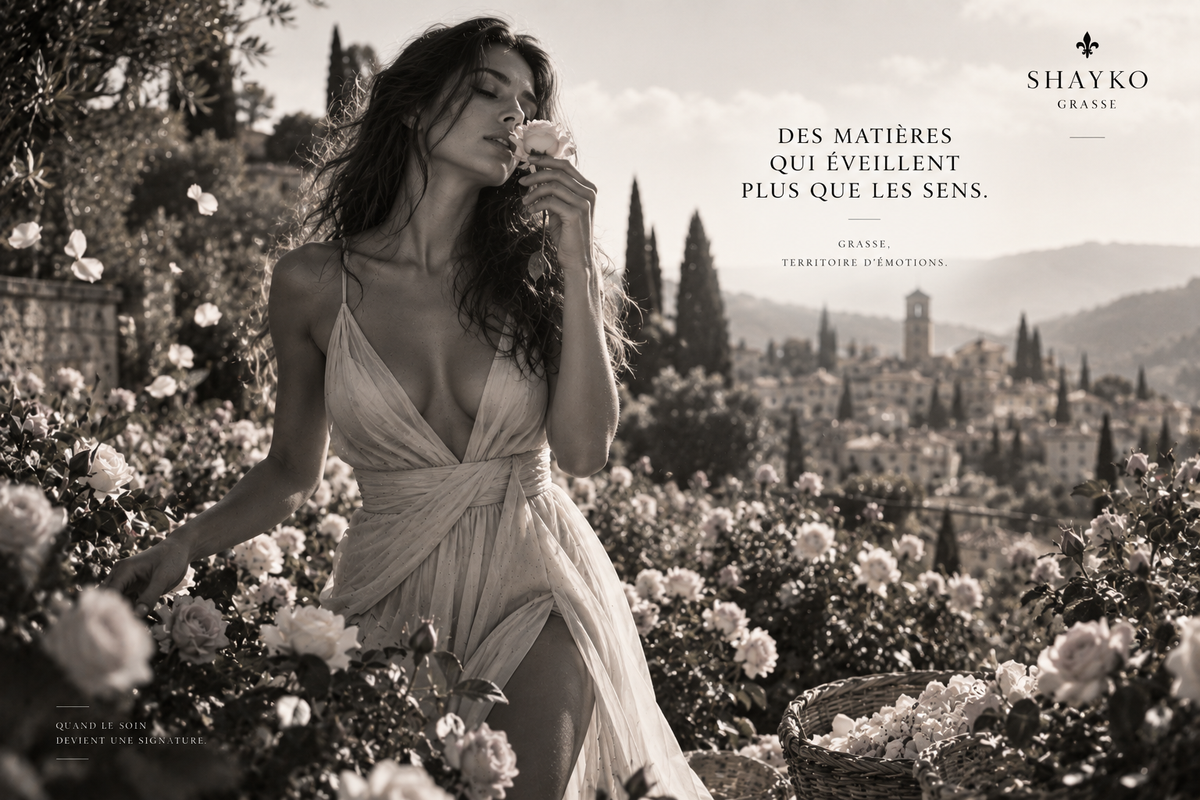
Before understanding a perfume, we feel it
- Faced with an image, we look.
- Faced with a text, we read.
- Faced with a perfume, the reaction can be almost immediate.
- We do not necessarily need to know its name, composition or the materials that make it up.
- Something attracts us.
- Or drives us away.
- We are intrigued.
- Calmed.
- Surprised.
Sometimes deeply moved without immediately knowing why.
Perfume has this rare ability to precede explanation.
We feel before seeking to understand.
The sense of smell has a particular relationship with our brain
This emotional power is not merely poetic.
It also has a physiological reality.
Olfactory information follows brain pathways closely linked to regions involved in memory and emotions.
This helps explain why a smell can sometimes trigger a particularly vivid recollection.
- A simple note can bring an entire scene to mind.
- Not only its image.
- But sometimes its atmosphere.
- The light.
- A person.
- A place.
- A sensation.
Perfume then becomes a kind of invisible passage between the present and memory.
We all possess an olfactory library
Since childhood, we have encountered thousands of smells.
- Clean laundry.
- Skin.
- Wood.
- Rain on dry earth.
- A house.
- A flower.
- A cut fruit.
- A kitchen.
- The sea.
- A book.
- A loved one.
We do not consciously record each of these experiences.
Yet some remain deeply associated with moments in our lives.
Our olfactory memory is built progressively in this way.
That is why two people can smell exactly the same perfume and have two different emotional experiences.
A material never evokes exactly the same thing for everyone
- Let us take a rose.
- For some, its scent will evoke a garden.
- For others, a person.
- A bouquet.
- A ceremony.
- An old cosmetic.
- Or simply the flower itself.
- Jasmine may evoke a summer evening.
- Mimosa, the light of late winter.
- Citrus fruits, a sensation of freshness.
- Wood, an interior or a forest.
- But none of these associations is universal.
- The perfumer therefore works with materials and accords whose characteristics they know, while understanding that part of their story will ultimately be written by the person who smells them.
Perhaps this is where the magic of fragrance begins
A perfumer composes.
But it cannot entirely decide what we will feel.
- It can create tension.
- Freshness.
- Depth.
- Transparency.
- A floral, woody, amber, green or powdery sensation.
- It can build an evolution.
- Creating contrasts.
- Seeking balance.
But when the composition encounters our personal history, something escapes it.
The fragrance then leaves the person who created it to belong to the person who wears it.
A fragrance is a composition
A fragrance is generally not a simple succession of independent smells.
- It is built through associations.
- Some materials linger.
- Others respond to one another.
- Some create contrast.
Others become almost imperceptible individually but contribute to the balance of the whole.
That is the art of composition.
A magnificent material in isolation does not necessarily create a great fragrance.
As in cosmetics, the quality of the elements is not enough: their harmony is essential.
Some notes appear and then disappear
When we discover a fragrance, we do not necessarily perceive everything at the same time.
- Certain facets can appear quickly.
- Others gradually reveal themselves.
- Some remain longer.
- This evolution is a profound part of the experience.
- A fragrance is therefore not entirely static.
- It has its own temporality.
This is what led perfumery to use the vocabulary of top, heart and base notes.
We will devote a future article to this architecture, because it deserves to be understood without being oversimplified.
The skin also plays a part in the story
Smelling a fragrance on a paper strip and discovering it on the skin does not always produce exactly the same perception.
Temperature, the medium, evaporation and the characteristics of the composition all influence its evolution.
That is why fragrance sometimes requires time.
The first moment is not necessarily the whole story.
It needs to be allowed to evolve.
To rediscover it a few minutes later.
Then sometimes several hours later.
A fragrance reveals itself over time.
Why do we sometimes feel the urge to smell again?
There are fragrances we do not immediately understand.
We approach the wrist once again.
Then once again.
Something intrigues us.
This phenomenon is interesting because it shows that a perfume does not always need to be immediately spectacular to become memorable.
An overly obvious composition can sometimes reveal everything it contains very quickly.
Conversely, some creations gradually reveal their complexity.
Olfactory luxury can thus lie in discovery rather than demonstration.
Intensity is not emotion
A powerful perfume is not necessarily more moving.
Projection, persistence and intensity are characteristics of a composition.
But they do not measure its ability to touch someone.
An extremely discreet scent can evoke a very deep memory.
An almost imperceptible material can become the signature we seek unconsciously.
Olfactory refinement is therefore not measured solely by the amount of space occupied.
Sometimes, what remains longest in the memory is precisely what never sought to impose itself.
Perfume has a singular relationship with absence
- A photograph preserves an image.
- A letter preserves words.
- Perfume, in turn, can bring back something that is no longer there.
- This is probably one of its most intimate dimensions.
- A familiar scent can evoke an absent person with astonishing intensity.
- For a few seconds, the memory seems almost physical.
- That is why some perfumes accompany us for years.
- They eventually become associated with a period of our life.
And sometimes, our own identity.
Wearing perfume also means leaving a trace
We do not smell only our own perfume.
- Others encounter it too.
- Sometimes before we have even spoken.
- Sometimes a few moments after we have passed.
- Perfume thus has a strange ability to be both intimate and shared.
- It belongs to the skin.
- But it also exists in the space around them.
- This olfactory trace can gradually become recognisable.
- A person enters a room.
- And even before we see it, something seems familiar to us.
Perfume can become a presence.
Grasse and the culture of olfactory emotion
In Grasse, speaking about perfume means entering a story shaped by materials, transformations, expertise and composition.
But this technical history would probably not have the same power if it did not lead to something deeply human:
Emotion.
- Growing a flower.
- Extracting or working with an aromatic material.
- Selecting it.
- Composing it with others.
- Adjusting the whole.
All these stages ultimately converge in an extremely simple moment.
- Someone breathes.
- And feels something.
Fragrance and care share a territory
This is precisely where fragrance meets our vision of cosmetics.
- A treatment has a function.
- A formula.
- A texture.
- But using it is also a sensory experience.
- Fragrance can accompany this experience.
It can give identity to an everyday gesture without needing to dominate it.
When the hand encounters a texture and the sense of smell simultaneously discovers a composition, several senses take part in the same moment.
Care is then no longer merely applied.
It is experienced.
Fragrance does not need to tell everything
In a world where almost everything must be explained immediately, fragrance retains a form of freedom.
- We can learn about its materials.
- Understanding how it is constructed.
- Studying its history.
- But part of the experience will always remain personal.
Why does this composition move us when another leaves us indifferent?
Why does this scent seem familiar to us when we can no longer remember where we encountered it?
There is not always a precise answer.
And perhaps it is not necessary.
An invisible emotion
Fragrance has neither a color of its own to contemplate nor a form we can hold in our hands.
And yet, it can alter our perception of a moment.
- It can become a memory.
- A signature.
- A presence.
- Sometimes even a part of our identity.
It is this paradox that makes perfumery so unique.
Creating something invisible that can leave a deeply real trace.
In Grasse, this pursuit spans generations.
And at SHAYKO, it reminds us that refinement does not always lie in what we show.
It can also live in what we make others feel.
“Fragrance is invisible. And yet, sometimes a few seconds are enough for it to open a door that only our memory still knew how to find.”
SHAYKO Grasse
Quand le soin devient une signature.